Managing Student Records at Stanford
Articulate Rise | Online Course
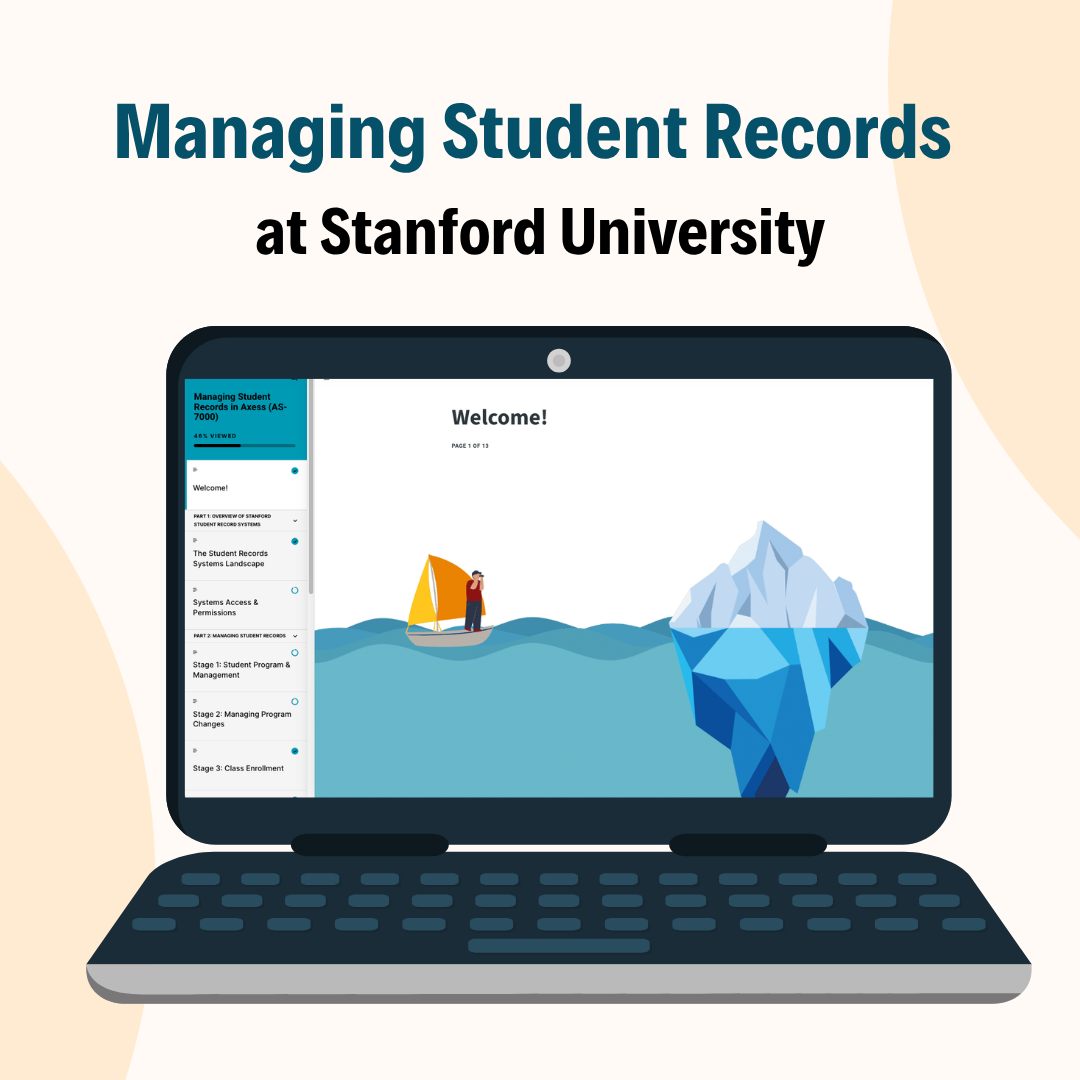
Project Brief
A comprehensive, stage-based training program designed to equip staff with the knowledge and skills to manage student records in Axess. This course replaced a fragmented, outdated training experience with a structured, trackable, and user-centered learning journey.
Axess is Stanford’s student management platform—providing staff with a centralized interface to access, update, and manage student records across academic and enrollment workflows.
Audience: University staff and faculty working with student records and graduate admissions processes
Responsibilities: Instructional Designer and Project Lead
Led end-to-end design and development
Facilitated SME collaboration and content validation
Defined learning objectives and course structure
Designed interactions, assessments, and learner experience
Tools Used: Articulate Rise, Canva, Adobe Illustrator, Google Workspace, STARS LMS
What It Looks Like
The Challenge
The existing student records training was:
Outdated and difficult to navigate
Not tracked in the LMS, limiting visibility and accountability
Dependent on manual processes (e.g., submitting PDFs for access)
Lacking a clear connection between systems, workflows, and real-world tasks
New staff struggled to understand not just how to complete tasks, but how everything fit together.
The Approach
I designed a stage-based learning experience aligned to the student lifecycle, grounding complex system processes in real-world context.
Structured content across 7 progressive stages (from program setup to degree conferral)
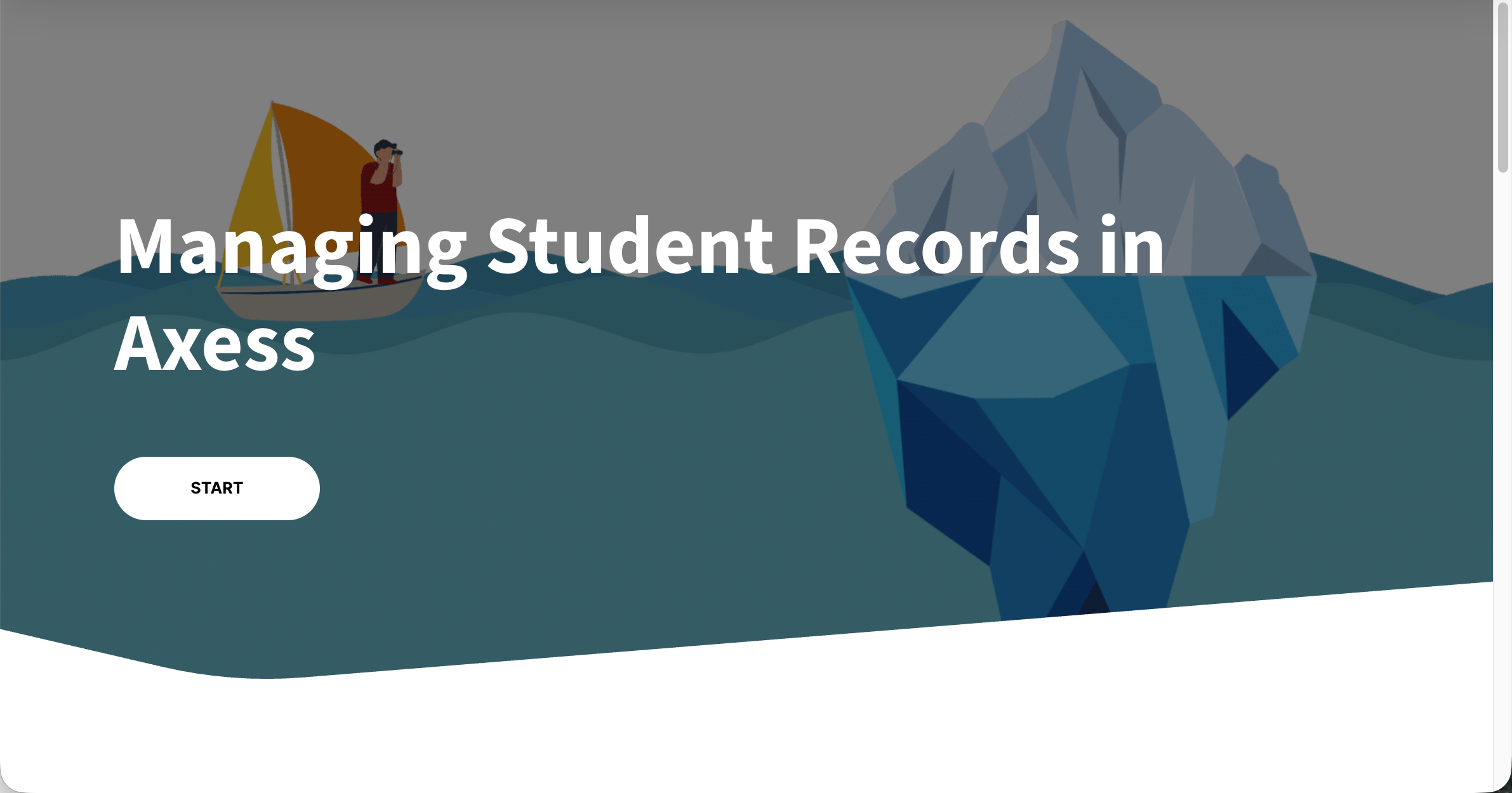
Introduced an “Above the Surface / Beneath the Surface” model to connect student experience with backend staff actions
Used interactive elements (tabs, hotspots, knowledge checks) to reinforce learning
Prioritized clarity, accessibility, and cognitive load management
Applied a blend of ADDIE (for structured design) and SAM (for iterative development and SME feedback loops).
The Solution
A modular, interactive training course that:
Provides a clear mental model of how student records systems work
Guides learners through real-world tasks and workflows
Includes knowledge checks with an 80% pass threshold
Is fully tracked and managed in the University’s LMS
Completion of the course enables staff to receive the Department Users authority, unlocking access to critical functionality in Axess.
Outcomes
Measured effectiveness through LMS analytics and post-launch qualitative research.
Improved learner confidence in navigating Axess and managing student records
Reduced onboarding friction and reliance on ad hoc support
Increased visibility into training completion and access readiness
How I Measured Success:
Tracked completion and engagement metrics in STARS LMS
Conducted 3-month post-launch focus groups with staff to assess clarity, usability, and real-world application
Used insights to inform continuous iteration and companion how-to guides